The Betting Percentages That Make Draws Good News for Bookmakers
 by Roy Brindley 27.07.2026
In sports, little beats watching your favourite football team win – or their rivals lose. As a result, the overwhelming majority of bets on football matches are placed on teams to win. When trying to win money consistently, is this the right strategy?
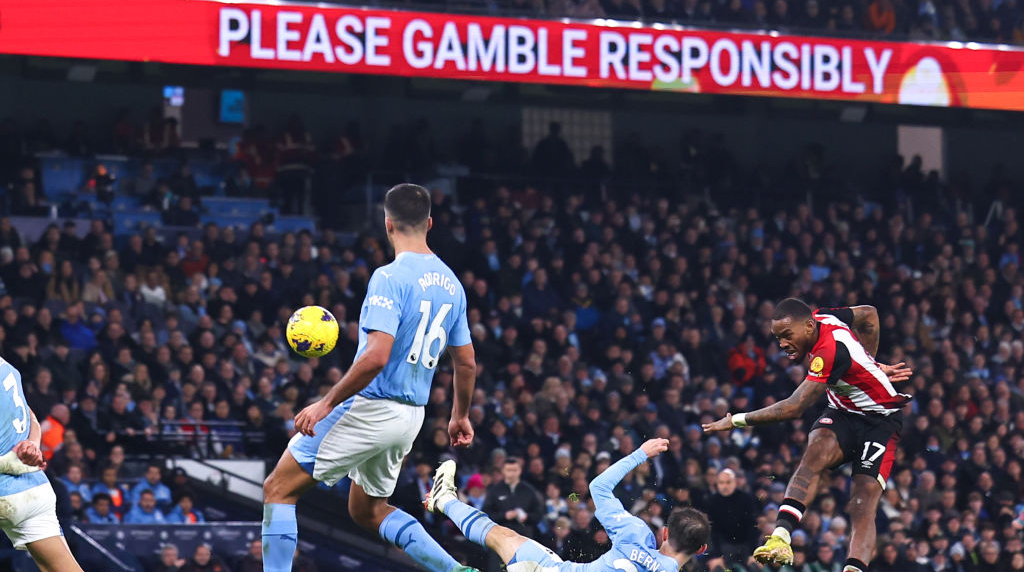
Punters need to stop ignoring draws when betting on football. © Getty Images
What Are the Odds of All Three Match Results?
It is a fact that bets placed on games to be drawn are rare. Punters seemingly ignore the possibility of a stalemate, probably because they do not want to see one. However, year-on-year, the stats show around 27% of all Premier League games finish as a draw.
Mathematicians will point out, on average, a draw should be priced around 11/4. But no matter the price, it is generally accepted that when a major football match ends in a draw, with few bets placed on the outcome, bookmakers win handsomely.
Statistically, a home win occurs around 46% of the time, and an away win is a 27% outcome. However, online betting sites would go broke if they bet purely to season-long statistics. There is a far greater chance that Arsenal will beat Coventry at home than, for example, 46% (23/20 odds).
How Are Football Odds Devised?
Bookmakers use the wisdom of in-house experts, historical statistics and fabled algorithms to devise odds on matches. Their calculations will factor in the draw’s unpopularity, and a few firms will adjust some of their prices based on their customers’ habits.
One major bookmaker, which has a concentration of traditional betting shops in the North-West of the UK, habitually offers shorter odds on Manchester teams on match day than rival companies. The reason being? An avalanche of bets placed on the sides by loyal fans is inevitable.
How and Why Do Football Odds Change?
As with all betting genres, including stock markets, price changes happen because of market forces – otherwise known as ‘the weight of money’. Bookmakers and betting sites must manage their liabilities. So, after odds are first published, bets are what cause price movements.
Odds compilers do not exclusively make changes to their prices because of big bets (or a host of small ones) on an outcome. When news breaks that a key player will miss the game, bookies reassess their opening lines. These changes can be dramatic when the full team sheets are published.
In fact, for many, betting on football is something of an art form. As with day traders in the stock market, many punters will use every piece of ‘real-time’ information available to them when ‘trading’ on a football match.
Any piece of team news can affect the prices on a match, so shrewd punters keep their fingers on the pulse by following multiple X feeds from the biggest clubs as well as official websites and individual players’ Instagram accounts and respected news feeds.
This becomes a game of cat-and-mouse with shrewd punters hoping to take advantage of any significant news before bookmakers have time to react by making changes to their odds.
The Overround in Principle and in Practice
The fact remains, apart from the rare occasion when a draw will see both teams proceed to the next round in a European Cup match, casual punters still tend to ignore the possibility of a drawn game.
Understanding the draw is normally the largest priced of the three potential match outcomes, here is an example of how an online betting site could price a game.
- 6/4 Home Win – a £40 bet returns £100
- 6/4 Away Win – a £40 bet returns £100
- 2/1 A Draw – a £33.33 bet returns £100
This market features a 113.33% bookmaker overround, meaning, in an ideal world, if a bookmaker takes £113.33 in bets, they will return £100 to punters in winnings. The remaining £13.33 is bookmaker profits.
But, in truth, if £113.33 is taken on bets in a single football match by any bookmaker, the cash is likely to be spread around differently, possibly looking like this:
- £60 placed at 6/4 on a Home Win (potential bookmaker loss of £36.67)
- £45 placed at 6/4 on an Away win (potential bookmaker profit of 0.83p)
- £8.33 placed at 2/1 on a Draw (potential bookmaker profit of £88.34)
A Business Approach to Beating the Books
Betting is a sophisticated business. However, understanding how bookmakers show a profit at the end of the year can be used to devise ways of improving your own chances of turning a profit as a punter. If the bookmaker wins on drawn games, you possibly can too.
And it is the gamblers who have one of the biggest advantages, whereby they do not need to place bets on every match. Bookmakers must offer odds on every game, and despite their algorithms and the market forces working in their favour, opportunities can still be identified.
 5 Exciting Slot Games Where You Hunt for Treasure
 Try Your Luck on These 5 Popular Roulette Games
 How Your Online Casino Customer Support Experience Should Be
 Give These 5 Progressive Jackpot Slot Games a Spin Today