How Successful Slots Shape the Next Generation of Games
 by Kevin Lentz 23.10.2026
The slot industry has always been remarkably innovative, right up until somebody has a massive hit. Then everybody wants a piece of that lightning in a bottle. Let’s call it imitative innovation: successful slots don’t just generate sequels, they influence what gets built next.
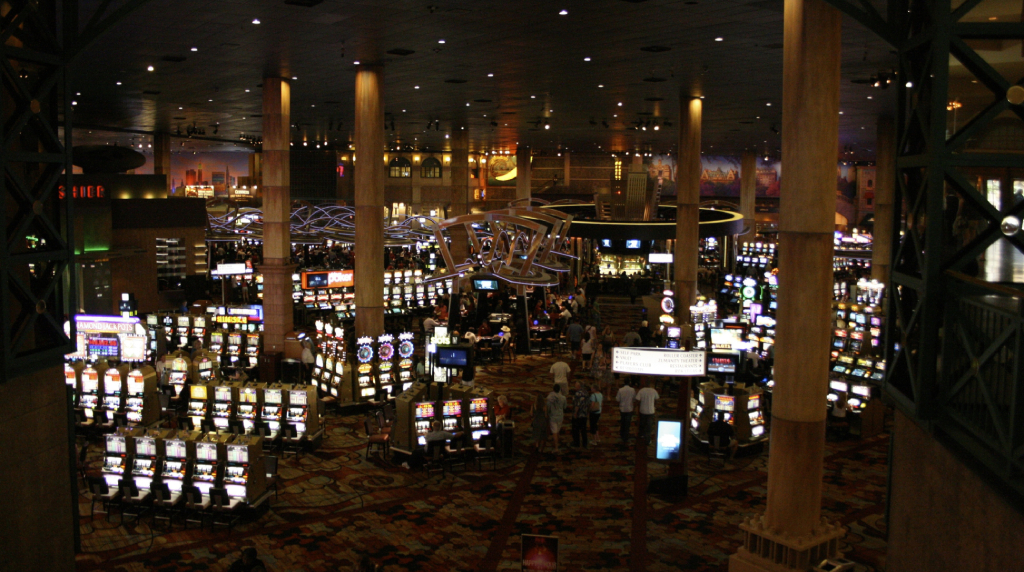
Every Hit is Market Research
Sure, studios know the ingredients, more or less, of a successful slot, and it’s always much harder to build a recipe from scratch, so sometimes they go for known crowd pleasers on the front of the menu.
Still, an ingredient list doesn’t always a successful recipe make. A beloved theme might get you the first spin, and math, pacing and features might get you the next hundred.
Branding in a popular series might even get the player back for a second try, but none of this can guarantee a hit. A popular slot doesn’t tell you why players loved it, only that the magic happened, much as a menu may sell you on the ingredients that make up a dish, but won’t ever be the reason you order the meal a second time.
When a Hit Becomes the Brand
We know what you’re thinking. Yes, sometimes studios get stuck in a rut and keep turning out the same game every now and again, but not that big of a deal, right? But how many ways do you think you can build a Wheel of Fortune slot machine? Apparently, the answer is somewhere between a whole heck of a lot, and please stop counting. Or more than 300 at last count and growing.
Wheel of Fortune had a couple of things going for it when it first arrived: life-changing jackpots, and a name everyone already knew from syndicated television. Some might even have had Pat Sajak’s voice rattling around in their heads already. But as the slots became more and more successful on their own, there was even less incentive to abandon all that familiarity.
And so, every mechanic and every theme, and every potential drop of interest was wrung from WOF to where New Jersey has an entire online casino built around Wheel of Fortune branded slot machines.
Aristocrat pulled off an equally impressive feat with its Buffalo franchise. It didn’t need a nationally known television brand to lean on. Instead, it took familiar Wild West imagery and somehow turned those thundering herds into a brand of its own. Slot players around the globe now recogniзe the symbols, the music, and that familiar experience, allowing Aristocrat to reinvent it over and over again.
Both managed to convey the same lesson to the industry, however. Once players know and recognize a successful game, starting from scratch isn’t necessarily innovation, instead it may be tossing away something valuable that you already have. But what if the most valuable part of that slot isn’t its name, or its characters or even its theme? What if it’s all in how the game works?
When the Mechanic Becomes the Brand
Big Time Gaming (BTG) took all of this one step further when its Megaways mechanic was first introduced in a slot titled Dragon Born in late 2015. But it was their breakout hit, Bonanza, the following year that really showed what the concept was capable of. Instead of the usual ten or twenty paylines, now changing reel configurations could create as many as 117,649 ways to win.
It didn’t take long for other slot studios to notice. It never does. Just browse our latest slot releases and count the copycats.
BTG soon realized the real money was in licensing the new mechanic to other developers, and a decade later hundreds of other slot houses have used it. Suddenly it wasn’t just the character, or theme, or even the name on the side that mattered, but the way the game itself was played.
And that may be our imitative innovation in its purest form. These new manufacturers weren’t trying to recreate a new Bonanza, but taking this new mechanic that had already become enormously popular with a vast swath of the slot-playing public and tying it into their own ecosystems, and sequels, and perennial remakes.
Why Not Just Build Something New
There’s a new wrinkle in our theory, though. Building a slot from scratch isn’t nearly as hard or expensive as it once was, and artificial intelligence will only continue to make it easier.
Developers can already use AI to generate artwork, explore different themes, write the code and prototype ideas far faster and cheaper than ever before, and every idea can be tested on social casino sites to see if there is interest. So, if innovation continues to cost less, is imitation even worth the trouble?
The answer remains yes, but not for the same old reasons. Development costs are no longer the scarce commodity in our equation; instead player attention is. A studio can build a perfectly original slot, but have absolutely no idea if anyone will play it.
An already successful game removes at least part of that uncertainty. Bonanza wasn’t about the technical specs of Megaways reels, but about whether anybody would want to play it. It turned out they did. In today’s world, every successful slot is somebody else’s market research.
Sometimes, It’s Just Steam-Engine Time
Of course, not everything that looks like imitation actually is. Sometimes an idea’s time has simply come. Sometimes nobody is following anybody. Sometimes technology rolls around and narrows all the available paths until they seem to point in the same direction. There’s actually a name for this: steam-engine time.
Writer Charles Fort noticed that major inventions seemed to arrive in clusters. Often, when enough of the necessary pieces had been put in place, the steam engine, radio and many other modern breakthroughs were developed independently by multiple inventors at roughly the same time. William Gibson, another science fiction writer, would say; it’s steam-engine time, when steam-engine time comes. The casino business, and slots in particular, has had plenty of its own steam-engine moments over the years.
We may be witnessing exactly this with today’s hottest crop of casino games. Live casino game shows like Crazy Time, crash games like Aviator, and an ever-increasing number of hybrid-style games don’t quite fit into the traditional slot box, yet all of them borrow heavily from what made slots so successful. Multipliers, bonus features, bright, immersive graphics, and quick gameplay are increasingly turning up in games that aren’t quite slots at all.
Crash games take that whole convergence thing just a bit further. They’ve taken all of those things, bundled them together, and designed them for the mobile screens where today’s player increasingly prefers to play. And those players have responded in a big way.
And once somebody proves that players are enjoying a new mechanic, expect a new, improved version of our imitation game. Developers now can watch what pieces of a game resonate, and fold those parts back into their own games. At that point, it’s increasingly hard to know where steam-engine time ends and imitative innovation begins.
And things are likely to get stranger still. Hard Rock Florida’s sportsbook now offers games that look and play remarkably like ordinary online slots, except the outcomes are derived from historical NASCAR race results instead of a traditional RNG.
Citizens Equity Research recently estimated these types of games have already generated over $1 billion in GGR. In other words, we have reached the point where you cannot only copy everything about a slot; you can now make a slot with an underlying mechanic that makes it not a slot; how’s that for both innovative and imitative?
So what will the next great slot innovation look like? We have no idea, yet that is probably the most interesting part. AI is very close to the point where it can build out almost anything the developers can imagine, all while tech opens up new paths for us to tread that have never quite existed before. What we are pretty confident in is that once somebody does find the next big thing, they won’t be alone for very long.
 How Successful Slots Shape the Next Generation of Games
 Why Prepaid Gaming May Be the Future of Online Casinos
 Sequel Syndrome: Why Some Slot Follow-Ups Flop and Others Level Up
 X Marks the Slot: 5 Treasure Hunt Titles Worth Chasing