Famous British Celebs Who Gambled and Lost Fortunes
 by Roy Brindley 13.07.2026
Gambling can cause harm in several ways. Willie Thorne, Paul Merson and Keith Gillespie are just three examples of sportsmen who lost their entire fortunes and a whole lot more. In a cautionary tale, here we look at the spectacular losses and pain they suffered.
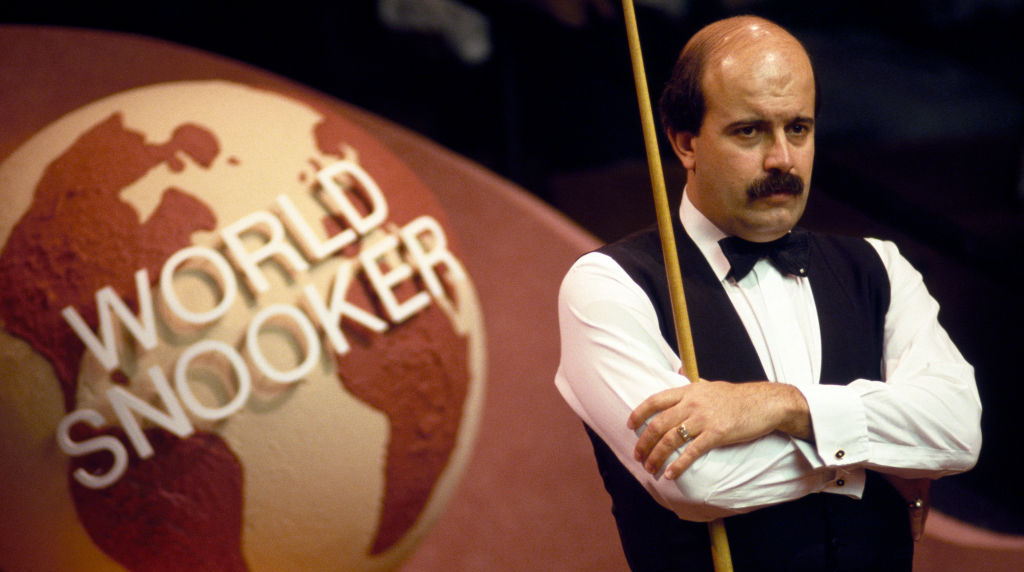
Willie Thorne earned fortunes from snooker in the 1980s but endured a lifelong struggle with gambling. © Getty Images
Successful Sportsmen That Failed to Play Safe
“When the Fun Stops Stop” is a responsible gambling slogan that was introduced in the UK in 2015 by a gambling industry-funded organisation. The message is clear, and the potential harm that problem gambling can cause should never be underestimated.
Sometimes, what is a fun pastime for so many can develop into a disorder. Aware that gambling can cause harm in several ways, especially when it becomes frequent or difficult to control, online-casinos.com is an advocate for safer gambling in the UK.
Here we will look at a handful of successful and wealthy British sportsmen who failed to heed the warning signs and spectacularly lost control of their gambling, in turn losing monumental sums of money.
If any part of their stories seems familiar, or if you are simply concerned about your gambling spend, we urge you to confirm that you are a responsible gambler by completing our quick self-assessment quiz.
Thorne Gambled Away His Entire Fortune
Willie Thorne’s gambling exploits are legendary. Folklore has it that the gifted snooker player, who was at his prime during the halcyon years of the sport, never placed a serious bet until he walked past a betting shop on the Isle of Wight, where he was playing a series of exhibition matches.
Seeing odds about the winner of that year’s BBC televised Pot Black tournament – a pre-recorded competition which he had played weeks beforehand – Thorne was tempted into the door and, unsurprisingly, his first bet was a winning one.
Insider knowledge did not always serve Thorne well. Another famous tale suggests he once placed an enormous bet on John Parrott to lose a match, knowing that the future world champ had lost his cue and was playing with a borrowed one.
At the time, Parrott could win playing with a broom handle, and Thorne, who was ironically commentating on the game in question for the BBC, witnessed this wizardry first-hand. In today’s money, his losses were estimated at £150,000.
Thorne’s losses continued, and his gambling issues became a recurring, destructive theme across four decades. Outlining his struggles in his many chat show appearances and in his two autobiographies, the famous snooker player ultimately gambled away his entire fortune.
Bankrupt and married twice, loans and debts he could not repay led him to attempt suicide at least twice and in 2020, during his final days, the 66-year-old, suffering from leukaemia, partly relied on public donations via GoFundMe to pay for his treatment.
Paul Merson Hit Rock Bottom
A 1995 autobiography titled ‘Rock Bottom’ and a 2021 memoir called ‘Hooked: Addiction and the Long Road to Recovery’ say everything you need to know about former Arsenal, Middlesbrough, Aston Villa, Portsmouth and Walsall midfielder, Paul Merson.
Merson, born in 1966 and at the height of his career at the turn of the century – when he earned 21 England caps – has checked himself into rehab on countless occasions. Interestingly, his struggle with addiction is not purely gambling-related. He has also had long-term issues with alcohol.
Merson has been very open about his issues in books and interviews. Married three times, the footballer turned commentator estimates his lifetime gambling losses to be over £7 million. The figure includes the loss of a £750,000 pension lump sum.
In 2021, when promoting a “therapeutic” documentary titled ‘Paul Merson: Football, Gambling and Me’, the former star said: “It’s been important for me to be able to see myself as a sick person trying to get well, rather than a terrible person trying to get good.”
In the same interview, it was revealed that Merson was living in rented accommodation with his third wife and their three young children. He also stated that he had handed over control of his finances to his wife.
Gillespie Knows How Not to Do It
Keith Gillespie signed for Manchester United aged 16 in the summer of 1991 and joined a youth side featuring legends such as Ryan Giggs, David Beckham, Paul Scholes, Gary Neville and Robbie Savage.
Almost 500 club appearances followed – 113 with Newcastle, 115 for Blackburn, 97 for Sheffield – and he played 86 times for Northern Ireland. During this time, he earned an estimated £7 million but lost the lot to gambling, a habit he picked up as a teenager.
Declared bankrupt in 2010, Gillespie has spoken candidly about how gambling addiction destroyed his finances. In 2013, in his autobiography, ‘How Not to Be a Football Millionaire’, he recounts losing £62,000 in two days, when aged 20 and earning £1,400 a week.
Gillespie’s bets grew as his wages skyrocketed. During his gambling peak, the Northern Ireland legend has spoken of staking £100,000 a day. Thankfully, there have been no further reports of issues for him since his bankruptcy. Gillespie has since called for tighter gambling regulation and has supported the Gambling with Lives charity.
Shilton’s Wife Saved Him
Peter Shilton is the most capped football player in the history of England’s men’s national team. He had a senior career that spanned 31 years and 1,005 matches, but throughout every part of it, and for 15 years after it had finished, he battled with severe gambling addiction.
I used to wake up in the morning often on two hours sleep and feel physically sick about my gambling losses.
I would be up all night betting on horses in Australia and the US until I could no longer stay awake, when I did wake up my stomach would churn and the dread of the… pic.twitter.com/BfU0VSi253
— Peter Shilton (@Peter_Shilton) March 25, 2026
Shilton’s gambling habit never hit newspaper headlines as only close friends knew of his struggles. In a 2021 Racing Post interview, he said, “No one helped me because I kept it [gambling] secret.”
When the goalkeeper quit gambling in 2015, he went public about his long-standing issue. At the time, he estimated his losses at £1 million, with a £20,000 single-day loss standing out.
In January 2020, Shilton declared that he had overcome a 45-year gambling addiction with the support of his second wife, Steph, an addiction counsellor. Together, the couple published ‘Saved: Overcoming a 45-Year Gambling Addiction,’ a book detailing the impact of the addiction and the recovery process.
They have since become campaigners for greater awareness of gambling harm and have supported efforts to tighten restrictions on gambling advertising in sport. In the 2024 New Year Honours, Shilton was awarded a CBE for services to association football and the prevention of gambling harm.
One Bet Too Many for Mark King
Snooker player Mark King spoke openly for many years about his serious gambling addiction that began in childhood and affected much of his adult life. His own estimates suggest he has squandered at least £500,000 and once put himself in £100,000 of gambling debt.
In 1998, King found salvation in Gamblers Anonymous but had relapses before seemingly getting his life fully back on track five years later. During the 2002/03 snooker season, he reached a career high ranking of 11.
Sadly, in November 2024, King was found guilty of match-fixing (contriving a 4-0 loss scoreline) and providing inside information for betting purposes on a 2023 game against Joe Perry. He received a five-year ban and was ordered to pay over £68,000 in costs. He is eligible to return to professional snooker in March 2028.
 Slot Sequels: Why Do Some Succeed and Others Fail?
 5 Exciting Slot Games Where You Hunt for Treasure
 Try Your Luck on These 5 Popular Roulette Games
 How Your Online Casino Customer Support Experience Should Be