US Sports Betting Tax Debate: 10% Could Raise $182B
 by Kevin Lentz 24.03.2026
A proposed federal tax hike could reshape US sports betting revenue, behavior, and long-term growth but challenges remain.
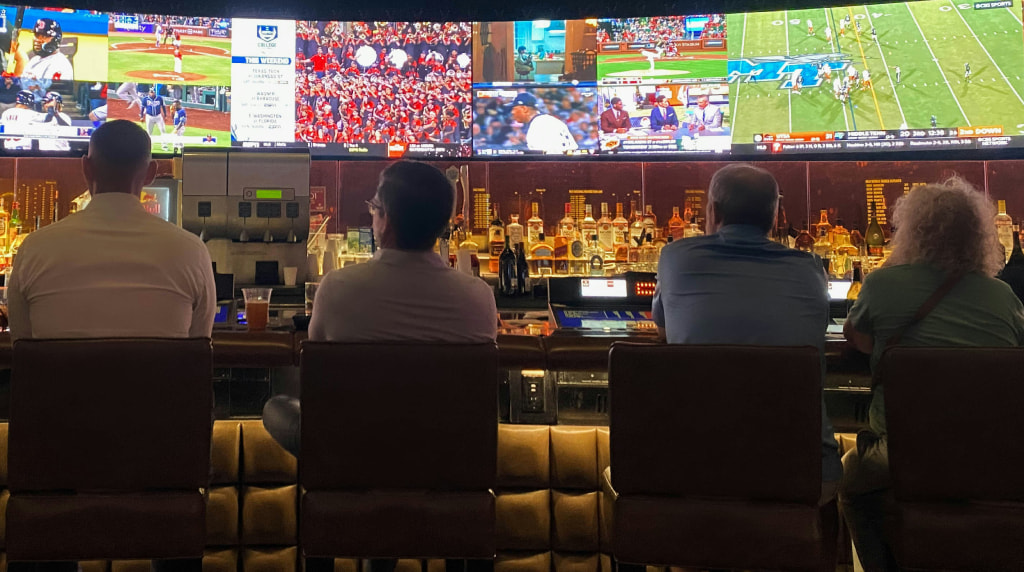
Total bets on sporting events in the US in 2026 may top $200 billion. © Amit Lahav, Unsplash
Key Facts:
- 10% federal tax could generate $182B, but reduce betting volume around 10%
- Operators pay the tax, but bettors ultimately feel the cost
- Sports betting is uniquely taxed, while slots and table games face no federal excise
- Higher taxes risk pushing players toward offshore books and untaxed prediction markets
The growth in legal sports betting in the US has been astounding. In less than 8 years, the market is forecast to see handle, or total bets made, increase to nearly $200 billion in 2026. But that kind of runaway success often attracts the wrong kind of attention, and in this case, it’s the taxman.
First, Illinois, New Jersey, and Louisiana all significantly raised tax rates on sports betting last year, sometimes by over 50%. Then it was Maryland, Ohio and Massachusetts all piling on to try to raise taxes this year. Massachusetts would more than double its current tax rate.
Now the federal government has raised the specter of a national tax on sports betting in what looks like yet another attempt to kill the goose laying the golden egg. A recent study from the Bipartisan Policy Center suggests that taking the current tax up from 0.25% to 5% might generate $100 billion dollars over the next ten years, and should that number go to 10% it might raise over $180 billion in the same time frame.
But those numbers only tell part of the story.
Who Really Pays the Tax
True, the tax is levied on the online sports book operator, but just like with alcohol or cigarettes, it seldom stays there. It is simply passed on to the end user, in this case the punter putting a few bucks down on the Blue Jays or the Seahawks.
But now the lines are wider, the parlay payouts poorer, and the promos kaput, all to pay the taxman they’re extra due. The operator has no choice; the vig or amount the house wins on bets is already tiny.
On those Point Spreads and Total bets, they have a house edge of about 4.5% on average, and out of that, they need to pay payroll, keep the lights on, and hopefully have a few bucks to comp you a drink or a hot dog at the end of the day.
Props, parlays and futures might have a bit higher house edge, but not so much that they can absorb one of their already highest expenses doubling overnight. It will be the player who eats the difference.
The Problem With Targeting Sports Betting
Interestingly, sports betting is the only gambling vertical with any federal excise tax at all. Slots, blackjack and poker don’t shoulder that same burden. The issue, of course, is that if you tax one product differently from another, you may very well see behaviour change.
But the issue doesn’t just become one of, well, I’m going to play slots because I get better reinvestment in comps and RTP since my operator isn’t taxed as much. It also becomes, What if I could get my bets down on the Blue Jays or Seahawks without having to pay an onerous tax at all?
What if I made my bets with one of the prediction markets like Kalshi or Polymarket that don’t currently pay any state tax, let alone a federal one? What if, because of that, I could get tighter lines and spreads and even better reinvestment on my “trading contracts” than I ever could on my sports bets?
The AGA is already predicting that those same prediction markets will peel off about $8 billion of that sports betting handle this year, and about $500 million in revenue.
But it’s not just prediction markets, there’s the danger of players returning to offshore gray and black market sportsbooks that also pay zero state or federal taxes and don’t need to follow any restrictive state regulations about no betting on in-state teams, or no prop bets or even deposit and affordability checks being proposed in some state venues and in the SAFE bet act at the federal level again.
Some players will simply bet less, but many will choose to move into less regulated and taxed products as they seek out not just better pricing, but a less restrictive model overall.
Revenue vs. Reality
On the other hand, there can be little doubt that sports betting and gambling in general do come with a cost for society as a whole. And like alcohol and tobacco before it, gambling will need to pay its fair share to help shoulder those costs and see that they aren’t unfairly passed on to the taxpayer, either at the federal or state level.
The revenue potential is real, and that money could go a long way towards helping with a nation-wide program aimed at mitigating betting-related harm and encouraging responsible gaming.
It could slow excess play as well, with some estimates from the study showing that a 10% federal tax might see a 10% decline in total sports betting, and that’s before various state tax increases are factored in.
Many see the current sports betting landscape and its almost vertical growth as unsustainable for the gambling consumer over time, and wish to slow it down.
That is why the idea of increased taxes, both to ensure that gaming pays its way for all its economic and social costs and as a brake on its excesses, is no longer confined to state capitols but is occurring in Washington as well.
What Happens Next
Gambling markets are highly price-sensitive. We’ve already seen this to be true in recent tax changes in places like the UK, which has instituted similar national taxes. Even modest increases change how often people bet, how much they bet, and most importantly, who they bet with.
But the issue is that once players leave the regulated ecosystem, they don’t always come back, another international lesson from Canadian provinces still trying to make up for past mistakes.
For now, this is still a policy discussion, but if history is any guide, it’s likely to become a much sharper policy debate soon, though more so in places like Boston and Annapolis for now.
But sooner rather than later, it will likely creep into DC, and it will be time for a national debate on whether sports betting has grown too far, too fast, as well as who should foot the social costs at the federal level.
 Preview of The Green Knight Camelot Gold Slot Released 11/26/26
 Ribs’ Golden Crypt Slot Preview: No Bones About It
 Chunky Carlo’s Money Mania Preview: An Offer You Can’t Refuse
 Preview of Barbarossa Beyond the Edge Online Slot